The Sembazuru Mascot
Design competition — the mascot of the Centre for Japanese Studies
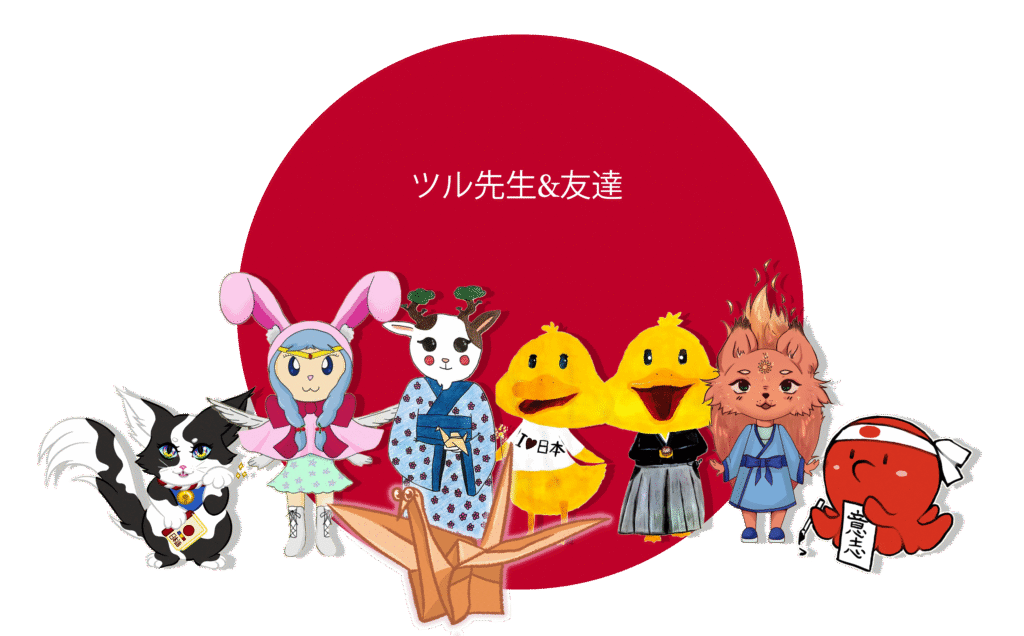
Students of the Sembazuru Centre for Japanese Studies took part in a creative design competition for the Centre’s mascot. Each proposal reflects the students’ passion for Japanese culture and their artistic creativity. Discover below the seven proposed mascots — unique characters that combine traditional Japanese elements with their own imagination.
„Yuki"
Alim Derya — Year I, Japanese-English
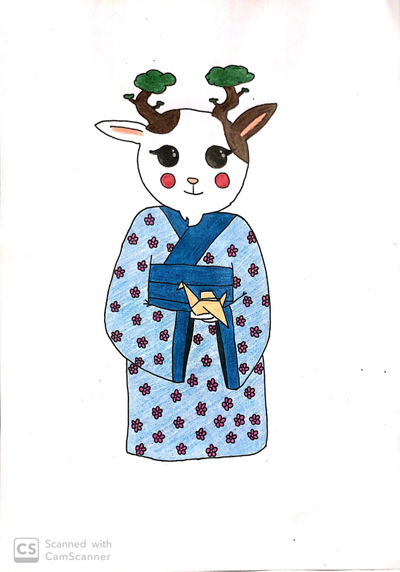
This is Yuki, my idea for the Centre’s mascot. She is inspired by Yuki, the toy in the Japanese classroom, except that she has a bonsai instead of little horns, cheeks that refer to the flag of Japan, a kimono, and she knows how to make origami. She is calm, gentle and very sweet.
„Sen"
Bejan Maria — Year II, Japanese-English
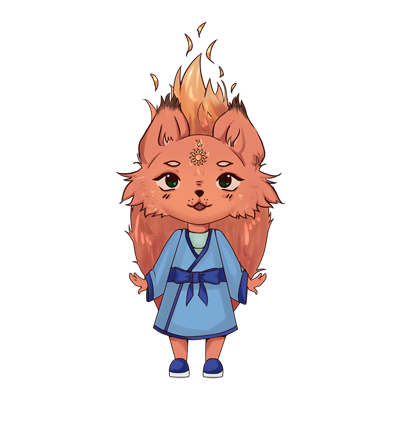
Sen is an intelligent being with various supernatural abilities. She can change her shape into that of a human, so in her free time she works as a tourist guide, eager to introduce foreigners to different aspects of Japanese culture. She would be delighted to represent the Sembazuru Centre for Japanese Studies!
„Kiki și Koko"
Crișan Daria-Mălina — Year I, Japanese-English
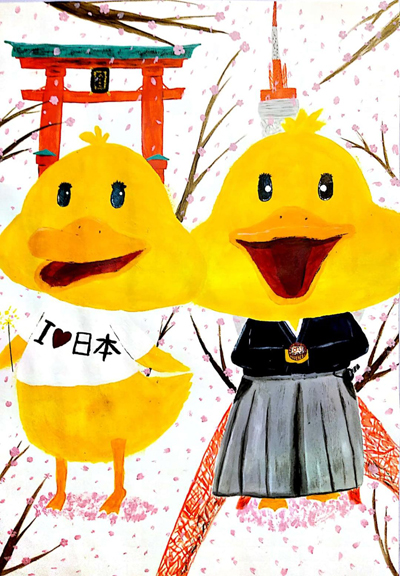
The ducklings Kiki and Koko are inseparable, forming a whole. Kiki, the female duckling, represents modern Japan, while Koko, the male, represents traditional Japan, as their clothes and accessories suggest. Behind Kiki stands the gate of the Itsukushima Shrine and behind Koko the Tokyo Tower, showing the blend of tradition and modernity found throughout Japan. Around them are cherry branches and petals — the cherry tree being both one of the best-known symbols of Japanese culture and a witness, a link between the two „versions” of Japan, the traditional and the modern.
„Daikichi"
Din Simina — Year II, Japanese-Finnish
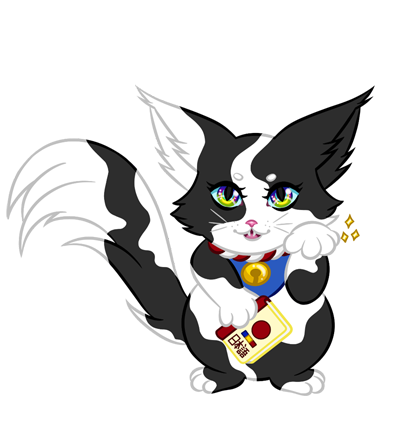
The character I propose as the mascot of the Centre for Japanese Studies is a cat named Daikichi 大吉 (lit. „great luck”). My intention was to keep, in his appearance, an element of Japanese culture that fascinates us all, so I started from the famous Japanese „maneki neko” figurine, of which I am particularly fond, in order to build a new, unique character that students and lovers of Japanese language and culture can identify with. Daikichi is a (more or less) „magical” cat who, as his name suggests, sets out to bring motivation, perseverance and plenty of luck to those who truly wish to explore the Japanese horizon. He is a keen reader — hardly surprising, since his multicoloured, lollipop-like eyes give him the special ability to memorise whatever he reads at a single glance. Even so, he is still learning Japanese himself, because he knows that however much you study it, it can never be exhausted. That is why he carries a Japanese book with him every day and encourages others to do the same. He is a clever, funny cat who knows how to entertain and lift someone’s spirits. That is why I believe he could be a fitting mascot for our centre of Japanese studies, where we are all encouraged to study Japanese and to take part in the cultural activities through which we discover Japan.
„Crystal"
Hardulea Mălina — Year II, Japanese-Spanish
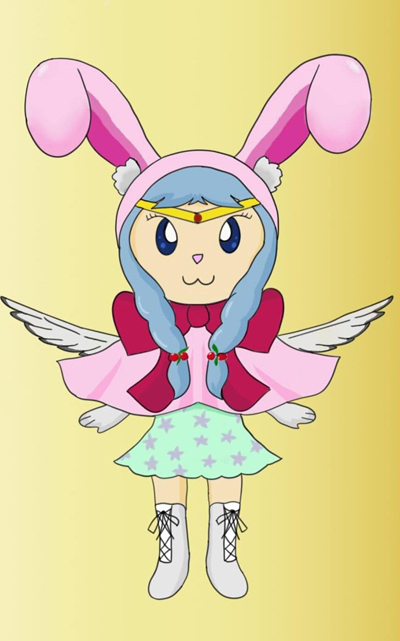
The character is called Crystal. I have added a few so-called „easter eggs”: the little crown inspired by Sailor Moon, representing part of Japanese culture (anime), the clips shaped like cherry blossoms (sakura), and the crane wings (inspired by the word tsuru).
„Takkun"
Matei Mihaela-Georgiana — Year I, Japanese-English
Name: Takkun
Sex: M
Age: 1 year
Blood type: B („blue”, because he has no red blood, but according to Japanese beliefs about blood types he is also a typical B)
Height: 40 cm
Likes: shodō, narrow spaces, ships in bottles, hugs
Dislikes: getting stained with ink, scorching days
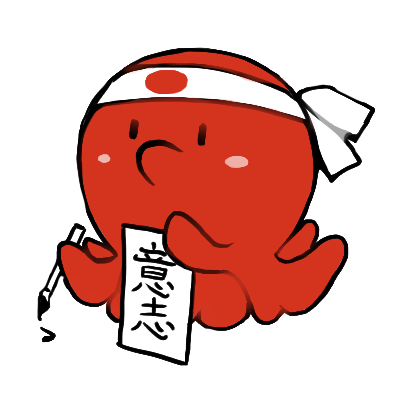
Takkun is a small octopus passionate about Japanese culture and history. Takkun led a simple, happy life like any other octopus, until one day he fell asleep in a clay pot on the ocean floor and woke up on the shore. There he met Mr Tsubo, who was painting the sea. Takkun offered to be his model, and the painting turned out wonderfully! To thank him, Mr Tsubo invited Takkun to his art exhibition, where he was warmly received by the visitors. At the exhibition Takkun learned about shodō and felt for the first time that he had found his calling. Until then, ink had been nothing but a manifestation of fear, but Takkun understood that one should not be afraid, but rather turn obstacles into pleasant — or at least useful — experiences for the future.
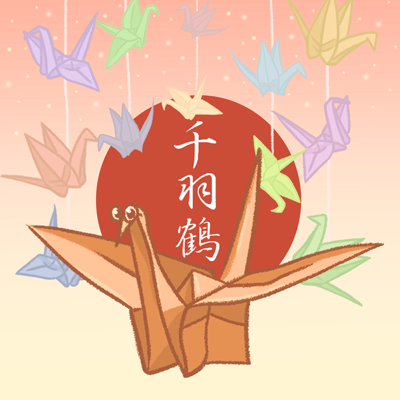
„Tsuru-sensei"
Nedelcu Andra — Year III, Japanese-English
This is Tsuru-sensei.
はじめまして
わたくしの名はつるです。みんなさんはつる先生と呼んでくださいね。
私は千年前にうまれた伝説の賢者で、自分の目的は知識を分け合いて、みんなに日本学の美しさを表したいです。もちろん、その知識はこれだけではなく、私は一番重要なことは愛だと思います。特に学習の愛です。
よろしくお願いします。
Would you like to find out more about Sembazuru's activities?
Discover our Centre’s events, projects and publications.